


Spotlight on Confidence
Oracy gives children and young people the skills to express themselves and develop their character

Emotional and social wellbeing
High-quality oracy education helps children navigate the world by communicating their needs.

Valuing every voice in the classroom
Encouraging students to support each other through talk has helped make the classroom a more inclusive space. Less confident speakers feel more able to use eye contact and contribute to discussions in small groups and more. For students who were previously quiet, oracy skills are supporting them to confidently use their voice.
Teaching oracy skills explicitly matters because it gives children the ability to articulate emotions, express their feelings and communicate effectively in different contexts.
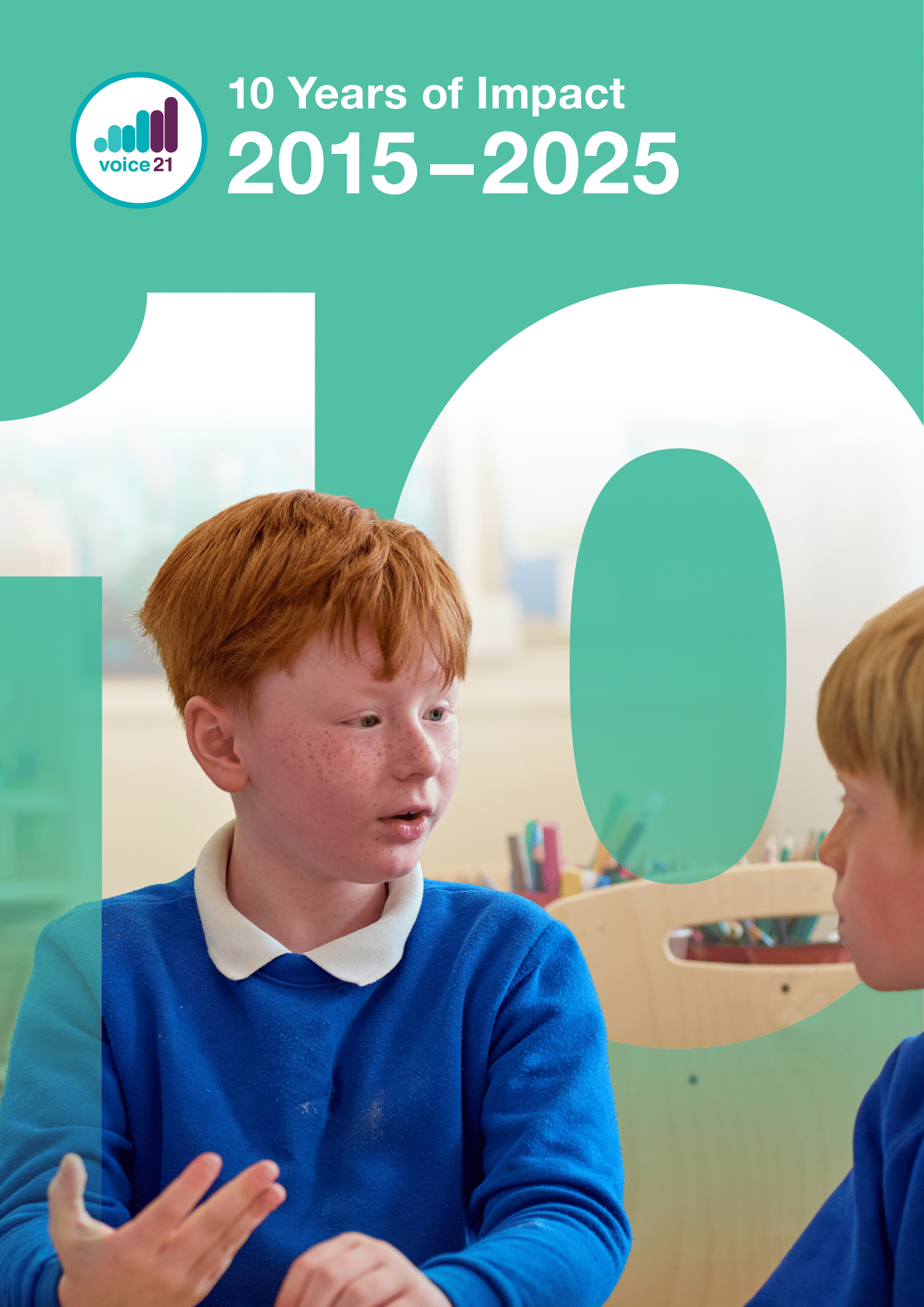
Ten years ago, Voice 21 set out to drive a big, irreversible change in the education system. To enable every child to use their voice to thrive in school, work and life by ensuring oracy is given the same status as literacy and numeracy in state schools across the UK.
Our ten-year anniversary special Impact Report looks back at the changes we’ve made, the schools we’ve worked with and the lives we’ve touched over that time.
Download the Ten Years of Impact Report 2015 - 2025
Anxiety at transition
Self-confidence empowers and prepares students for their next transition.
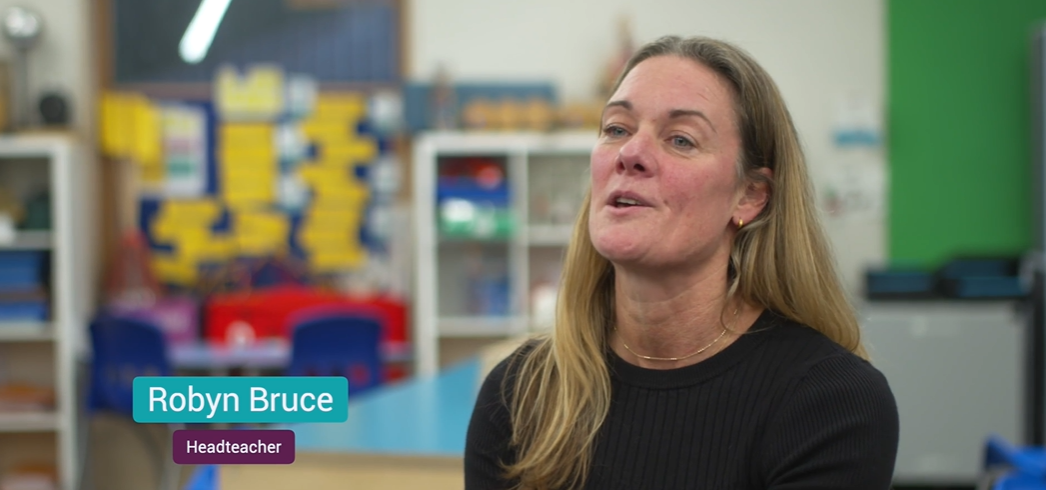
Continue learning about the impact of oracy in schools
Behaviour & Culture
ImpactThrough oracy children are better able to regulate, communicate and manage their feelings in difficult situations. Find out more about the link between oracy and behaviour & culture.
Vocabulary
ImpactThe confidence to speak up, build new relationships and be agile communicators, prepares children and young people for success in school life and beyond. Learn more about the link between oracy and confidence.